

.avif)
We recently saw a prospective customer methodically click through every single page of our help documentation—before ever speaking to a salesperson. This isn't an isolated incident. It’s a clear signal that the line between support content and marketing content has disappeared. Buyers use every piece of information available to make a decision, and they often trust your technical guides more than your ad copy. This shift requires a new strategy, one that treats your most factual content as a powerful sales tool. This is the core of documentation marketing: turning your help center into a high-trust asset that attracts and converts customers.
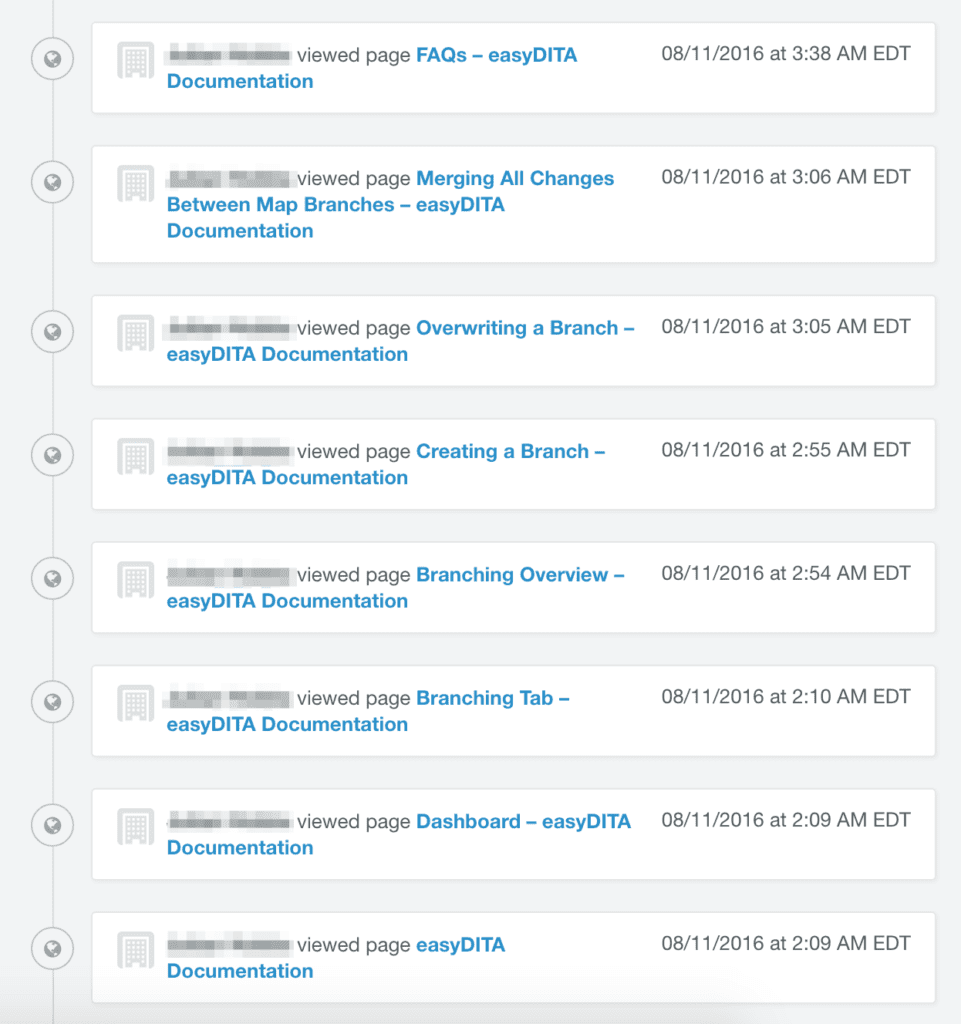
A quick trip through our docs portal...This visitor clicked a link in our follow-up email that led him to our documentation site. Because he clicked from that email link we could see his activity path on the site (only on our site!) during that session. And he proceeded to methodically (and quickly) look at every page on the docs site. As a marketer, this was interesting because it verified a very important new way people are interacting with documentation: They are using it to do primary research before a purchase.
What is Marketing Documentation?
The experience with that prospective customer highlights a critical point: the line between product documentation and marketing content is blurring. People use any and all information available to them to make purchase decisions. This makes every piece of content you produce a potential marketing asset. So, what exactly falls under the umbrella of marketing documentation? At its core, marketing documentation is any content a business creates to promote its products, services, or brand. This includes the obvious things like brochures and social media posts, but it also covers the strategic documents that guide those efforts behind the scenes.
Think of it as the complete operational library for your marketing team. It’s the collection of plans, research, briefs, and guides that ensure every marketing activity is aligned, consistent, and effective. Just as technical documentation provides a single source of truth for product information, marketing documentation provides a single source of truth for your brand’s message and go-to-market strategy. It’s the framework that turns random acts of marketing into a cohesive, goal-oriented machine, ensuring that every team member, from a content creator to a campaign manager, is working from the same playbook.
Defining the Scope: Beyond Product Guides
For those of us steeped in the world of technical content, it’s easy to think of documentation in terms of user manuals and API guides. But the scope is much broader. When a potential customer lands on your help pages, they aren’t just looking for a solution; they’re forming an opinion about your company. According to KnowledgeOwl, "Good documentation shows customers that a company cares about them and is willing to help." This interaction is a marketing touchpoint. A clear, helpful, and well-organized knowledge base can be a powerful tool for building trust and demonstrating your product's value long before a sales conversation ever happens.
Marketing Documents vs. Marketing Materials
It’s also helpful to clarify the difference between “documents” and “materials.” The terms are often used interchangeably, but there’s a subtle distinction. As PandaDoc notes, "Marketing materials is a broader term than marketing documents, as materials can include physical items like samples or gifts." Marketing documents are the specific, typically text-based assets—the strategies, plans, briefs, and reports. Marketing materials are the entire collection of promotional items, both digital and physical. For our purposes, we’re focusing on the documents that provide the strategic foundation and operational guidance for all marketing efforts.
Why Formal Marketing Documentation Matters
Without formal documentation, marketing teams often operate in silos, leading to inconsistent messaging, duplicated work, and misaligned goals. Formalizing your marketing documentation brings order to the chaos. It ensures everyone on the team understands the objectives, target audience, and key messages. This alignment is crucial for efficiency and scale. More importantly, as Marrina Decisions points out, "It helps businesses truly understand their customers' needs." Strong documentation forces you to articulate your strategy, which in turn clarifies your thinking and strengthens your connection with your audience. It’s the foundation of good content governance for your entire marketing operation.
Types of Strategic Marketing Documents
Marketing documents aren't a monolithic category; they serve different functions at different stages of the marketing lifecycle. We can group them into three main buckets: planning and strategy documents that set the direction, execution and process documents that guide the day-to-day work, and brand and guideline documents that ensure consistency. This structure helps teams move from high-level vision to tactical implementation without losing sight of the core objectives. The sheer variety can be surprising, with one source identifying over 19 important types of marketing documents, from briefs and playbooks to vision statements and content schedules. Each one plays a specific role in creating a comprehensive and functional marketing operation.
Planning and Strategy Documents
These are the foundational documents that answer the big "why" and "what" questions. They are the blueprints for your entire marketing program, created before any campaigns are launched or content is written. This category includes everything from initial market research that identifies opportunities to high-level marketing plans that outline annual goals. These documents ensure that all marketing activities are grounded in data and aligned with broader business objectives. They provide the strategic direction that prevents the team from chasing fleeting trends and instead focuses efforts on what truly matters for growth.
Marketing Briefs and Proposals
A marketing brief is a concise document that outlines the objectives, audience, and key deliverables for a specific project or campaign. A proposal is often a more formal document used to get buy-in and budget approval from stakeholders. Both serve to align all parties on the scope and goals from the very beginning.
Market Research and Requirements Documents (MRDs)
Market research reports synthesize data on industry trends, competitor analysis, and customer demographics. An MRD takes this a step further, defining the specific market needs and customer requirements that a product or campaign aims to address. These documents provide the evidence-based foundation for your strategy.
Marketing Plans and Strategies
A marketing strategy is your high-level approach to achieving your business goals, outlining your value proposition and target markets. The marketing plan is the tactical roadmap that details the specific activities, channels, timelines, and metrics you'll use to execute that strategy over a defined period, like a quarter or a year.
Execution and Process Documents
If strategy documents are the "what," execution documents are the "how." These are the operational assets that teams use daily to manage their work, coordinate efforts, and bring campaigns to life. They translate the high-level plan into actionable tasks and timelines. This includes detailed campaign plans, content calendars that schedule posts and publications, and process descriptions that standardize workflows. These documents are vital for maintaining momentum and ensuring that nothing falls through the cracks, especially in fast-moving teams with multiple concurrent projects.
Campaign Plans and Content Schedules
A campaign plan drills down into the specifics of a single marketing initiative, detailing the messaging, channels, budget, and timeline. A content schedule, or editorial calendar, maps out all content production and publication dates, ensuring a steady and strategic flow of information to your audience.
Social Media Calendars
This is a specialized type of content schedule focused exclusively on social media channels. It plans out posts, specifies formats (e.g., image, video, story), and tracks engagement, helping to build a consistent and engaging presence across platforms.
Marketing Process Descriptions
These documents outline the standard operating procedures (SOPs) for recurring marketing tasks, such as how to request a new design, approve a blog post, or report on campaign performance. They are essential for scalability, onboarding new team members, and ensuring consistent quality.
Brand and Guideline Documents
These documents are the guardians of your brand identity. They define who you are as a company and how that identity should be expressed across all marketing channels. This category includes everything from high-level mission and vision statements to detailed brand style guides and marketing playbooks. Their purpose is to ensure consistency in voice, tone, design, and messaging, so that every interaction a customer has with your company feels cohesive and authentic. This consistency is what builds brand recognition and trust over time.
Vision, Mission, and Values Statements
A vision statement describes the future you want to create, while a mission statement defines your company's purpose and how you'll achieve that vision. Values statements outline the core principles that guide your company's behavior. Together, they form the philosophical core of your brand.
Marketing Playbooks and Policies
A marketing playbook is a comprehensive guide that details strategies, tactics, and best practices for different marketing scenarios. Policies are the specific rules of engagement, such as social media usage guidelines or email marketing compliance rules, that ensure the team operates ethically and effectively.
Pitch Decks and Presentations
These are curated documents used to present your company, product, or a specific campaign to external audiences like investors, partners, or potential clients. They distill your brand's story and value proposition into a compelling and visually engaging format.
Creating and Managing Your Marketing Documentation
Knowing the different types of marketing documents is one thing; effectively creating and managing them is another. The goal is to build a living, breathing system, not a folder of static PDFs that quickly become outdated. This requires a deliberate approach to content operations that mirrors the discipline found in technical documentation teams. By establishing clear processes for creation, review, and storage, you can build a reliable single source of truth that empowers your marketing team to work more efficiently and strategically. The key is to make your documentation simple to create, easy to find, and straightforward to update.
How to Build a Marketing Strategy Document
A marketing strategy document is your North Star. To build one, start by defining clear, measurable objectives (e.g., increase lead generation by 20%). Next, conduct thorough research to define your target audience personas and analyze your competitors. From there, outline your core messaging and value proposition. Then, detail the marketing channels and tactics you will use to reach your audience (e.g., content marketing, paid ads, email). Finally, establish the key performance indicators (KPIs) you will use to measure success and set a realistic budget and timeline. This structured approach ensures your strategy is comprehensive and actionable.
Improving Your Internal Documentation Processes
Many marketing teams struggle with documents scattered across shared drives, personal computers, and various cloud apps. This chaos leads to version control nightmares and wasted time. To fix this, you need to standardize your approach. As one expert suggests, you should "Use standard templates for all your marketing materials. Keep all documents in one easy-to-find place." Adopting a centralized repository, like a Component Content Management System (CCMS), can transform your workflow. A CCMS allows you to manage content as modular components, enabling reuse, simplifying updates, and ensuring consistency across all your marketing documents.
The Role of a Marketing Technical Design Document (MTDD)
For complex, technology-driven marketing campaigns, a Marketing Technical Design Document (MTDD) can be invaluable. Similar to a technical specification document, an MTDD outlines the technical requirements, data flows, system integrations, and tracking mechanisms for a marketing initiative. For example, it might detail how a new lead capture form integrates with your CRM and marketing automation platform. This document serves as a critical bridge between marketing and IT or development teams, ensuring everyone is aligned on the technical execution and that the campaign functions as intended from a data and systems perspective.
Using Product Documentation as a Marketing Asset
This brings us back to where we started: the powerful, often overlooked marketing potential of your product documentation. Your help guides, knowledge base, and FAQs are not just cost centers for solving problems; they are opportunities to demonstrate your expertise and build customer confidence. As KnowledgeOwl puts it, "Product documentation...is a great chance for companies to market their brand." When customers find clear, comprehensive, and easy-to-understand answers, they develop trust in both your product and your company. This positive experience can be a deciding factor for prospects evaluating your solution and a key driver of loyalty for existing customers.
To turn your technical content into a marketing engine, start by optimizing it for search engines so prospects can find answers directly from Google. Use plain language and avoid jargon to make complex features accessible. Most importantly, ensure your documentation is always accurate and up-to-date. A platform built for structured content allows you to create content once and publish it everywhere—to your help portal, in-app guides, and even marketing sites—ensuring consistency and accuracy across every touchpoint. By treating your documentation with the same strategic care as your marketing campaigns, you can transform it into one of your most effective assets for attracting and retaining customers.
Is Your Documentation Your Most Honest Salesperson?
If you think about it, this makes total sense. Marketing descriptions of complex products very seldom tell you anything specific about how it works, how hard it is to set-up and learn, its actual capabilities and how they work, etc. (I’m a marketing writer and this really bugs me when I’m researching a product, but that’s another rant…). Documentation does all these things in very granular detail because it’s written and designed to clearly help an actual user use the product (at least it should do this). It contains warnings and legal disclaimers, offers a view into complexity and scalability, and tells the visitor a lot about how the company will provide support services to them. And it does this with an authority that no marketing piece can ever convey. This authority comes from the fact that poor documentation may indicate a poor user experience, leading to negative reviews, customer churn, and many other bad things. Conversely, if the documentation looks good, the customer experience is more likely to be positive.
How Prospects Use Your Docs to Make Buying Decisions
Think about a business-to-business (B2B) purchasing process. A problem is identified and is becoming more urgent. Management tasks a potential user with researching solutions. They visit websites, ask current users, read reviews, and look at the documentation because if they recommend this thing, they will be the ones using it! And then they make their recommendations to management.
Tactics for Better Documentation Marketing
So, if prospects are using your documentation to evaluate your product, how can you make sure it’s doing the best possible job of selling for you? It’s not about turning your help center into a collection of flashy ads. It’s about applying marketing principles to your content to make it more discoverable, engaging, and trustworthy. Good documentation shows customers that a company cares about them and is willing to help, which is a powerful marketing message on its own. By focusing on a few key areas, you can ensure your docs not only support existing users but also help convert new ones.
Improve SEO with Keywords
Before a prospect ever lands on your website, they start with a search engine. They’re not searching for your product name; they’re searching for their problem. By incorporating relevant keywords and phrases that your potential customers use to describe their challenges, you make your documentation discoverable at the earliest stage of their research. This isn't about keyword stuffing. It's about understanding user intent and answering their questions directly. When your help articles rank for problem-aware search terms, you position your product as the solution and your company as a helpful expert, building trust before the sales team even gets involved.
Use Strong Visuals and Design
No one wants to read a wall of text, especially when they’re trying to understand a complex product. You need to make your documentation visually appealing to connect with your audience. Use high-quality screenshots, annotated diagrams, and even short video tutorials to break up text and illustrate key concepts. A clean, intuitive layout and thoughtful design do more than just improve readability; they reflect the quality of your product. If your documentation is clear, professional, and easy to follow, prospects will assume your product is, too. It’s a subtle but powerful way to build confidence in your offering.
Reinforce Your Brand Identity
Your documentation shouldn't feel like a separate, forgotten corner of your company. Make sure your documentation clearly looks like it belongs to your company by using consistent branding, from logos and color schemes to the tone of voice. This creates a seamless and professional experience as users move from your marketing site to your technical content. A unified brand presence reinforces your identity and builds trust. This is where strong content governance becomes critical, ensuring that every piece of content, no matter how technical, aligns with your brand standards and speaks with one consistent voice.
Streamline User Onboarding
One of the biggest questions a prospect has is, "How hard will this be to set up and use?" Your documentation can answer this directly. Provide clear guides to help people start using your product easily. Well-structured "Getting Started" sections, tutorials, and step-by-step guides can dramatically reduce the perceived complexity of your product. When a potential customer sees a clear, logical path from purchase to proficiency, it lowers their risk and increases their confidence in making a buying decision. This content effectively sells the user experience by showing, not just telling, how quickly they can achieve their goals with your product.
Should You Gate Your Documentation?
So, start thinking about documentation as a marketing and sales resource. Don’t hide it behind logins or limit access to actual customers. Feature links to it on your product pages and reference it in your marketing materials. Make sure your sales team is familiar with your documentation and shares relevant links to it when prospects have questions about a particular feature or operation. There is rarely a reason to limit access to this resource, yet many companies don’t expose their documentation until a purchase is made. This is one of the reasons publishing to online media is vitally important (for example, having your documentation on mobile devices means it moves out into the field with your products).
Connecting Your Docs Team to Marketing Goals
Recognizing that your documentation is a key touchpoint for potential buyers is the first step. The next is building a bridge to your marketing team. This isn't about turning technical writers into marketers or sacrificing accuracy for flashy copy. Instead, it's about creating a collaborative relationship where both teams can benefit from each other's expertise. Marketing understands the customer journey and what drives a purchasing decision, while your team holds the detailed, factual content that builds the ultimate trust and confidence in the product. When these two functions align, your documentation becomes an even more powerful asset for the entire organization.
This collaboration works because your documentation provides an unmatched level of authority. While marketing materials are designed to attract and persuade, technical docs are designed to explain and instruct. Prospects know this. They turn to your documentation for the unvarnished truth about how a feature works or what the setup process really entails. This detailed information helps them make a more informed decision, creating a better customer experience from the very first interaction. By working with marketing, you can ensure this valuable content is visible and accessible to prospects at the right moment in their research process, reinforcing the product's value with pure, unadulterated facts.
So, how do you start? Open a line of communication. Set up a recurring meeting to share insights. Marketing can provide data on the questions prospects ask most frequently during sales calls, which can inform your content strategy. In return, your team can share analytics on which help pages are viewed most often, revealing what features users and prospects are most interested in. This feedback loop ensures your hard work has a greater impact. Using a centralized platform like a Component Content Management System (CCMS) makes this process even smoother, creating a single source of truth that both teams can pull from to ensure consistency and accuracy across all company communications.
Why Your Docs Team Is Your Secret Marketing Weapon
Work with your tech writers to develop a clear tone and voice, and conversational language style guides that won’t scare away a first-time visitor doing their homework. Generally speaking, this change in tone from very technical to more plain language style has become the standard for technical writing. In addition to making your documentation more user-friendly, it offers the added advantage of being much easier to translate into other languages.
Is Your Docs Team a Cost Center or a Revenue Driver?
In the world of content management, documentation teams have often been relegated to a poor relations role in many companies, resulting in understaffing, limited budgets, and backlogs of inaccurate or out-dated documentation. To me, this is simply crazy. Marketing teams need to embrace documentation, fund quality technical content development, and push it out to where prospective customers can find it.Finally, give the docs team credit where credit is due- they should be direct contributors to the bottom line, not a cost center.
Documenting and Measuring Marketing Results
When you begin treating your documentation as a marketing asset, you also need to measure its performance like one. This isn’t just about tracking page views; it’s about understanding how your technical content influences a prospect’s journey from initial research to a final purchase decision. Marketing documentation serves as a powerful tool for making smarter, data-driven choices that strengthen your strategies. By setting clear goals and tracking progress, you can demonstrate the tangible value your documentation team brings to the company's bottom line. This shifts the perception of technical content from a necessary expense to a critical component of the sales and marketing engine, proving its worth with concrete numbers.
Tracking Performance Against Goals
To measure the impact of your documentation, you first need to define what success looks like. Start by establishing clear, measurable goals that connect documentation usage to marketing outcomes. For example, a goal could be to increase the number of qualified leads who engage with technical content before requesting a demo. Another might be to reduce pre-sale support questions by providing clearer, more accessible information. Using analytics tools, you can track how users find your docs, which pages they visit most, and how long they stay. This data provides a baseline for understanding user behavior and helps you identify which content is most effective at guiding prospects through their decision-making process.
Monitoring Key Performance Indicators (KPIs)
Once your goals are set, you can monitor specific Key Performance Indicators (KPIs) to track progress. Go beyond basic traffic metrics and look at engagement. For instance, track the referral path to see how many users navigate from a documentation page to a "contact sales" or "pricing" page. Use tools like Google Analytics to monitor on-page search queries within your help portal; this tells you exactly what potential customers are trying to learn about your product. Other valuable KPIs include time on page, bounce rate for key articles, and the number of unique visitors who view multiple documentation pages in a single session, indicating deep interest in your product's capabilities.
Gathering Customer Feedback
Quantitative data tells you what is happening, but qualitative feedback tells you why. Actively gather input from both prospects and customers to understand their experience with your documentation. You can implement simple feedback tools on your help pages, like a "Was this article helpful?" button. More importantly, create a strong feedback loop with your sales and customer success teams. They are on the front lines, hearing directly from prospects about what information they need. When the sales team can report that a specific set of documents helped close a deal, you gain powerful testimonials for the value of your content.
Calculating ROI and Reporting on Success
Connecting your documentation efforts to revenue is the ultimate goal. To calculate the return on investment (ROI), you need to correlate content consumption with sales outcomes. For example, you can analyze whether leads who read your documentation have a higher conversion rate or a shorter sales cycle than those who don't. By integrating your help portal analytics with your CRM, you can attribute specific deals to the influence of technical content. Keep all of this data, along with key takeaways and lessons learned, in a centralized report. This not only demonstrates the value of your work but also provides a foundation for future content strategy and investment.
The Role of Technology in Marketing Documentation
Effectively using documentation as a marketing tool isn't just about writing great content; it's about having the right systems in place to manage, publish, and analyze it at scale. Technology is the backbone that supports a modern content strategy, enabling teams to maintain consistency, collaborate efficiently, and deliver personalized experiences to prospects. Without a solid technological foundation, even the best content can become siloed, outdated, or difficult for users to find, undermining its potential as a sales asset. The right tools transform your documentation from a static library into a dynamic, intelligent resource that actively contributes to business growth.
Centralizing Documentation for Consistency and Scale
A single source of truth is non-negotiable for high-performing documentation. When content is scattered across different platforms and formats, inconsistencies are inevitable, which erodes trust with potential customers. A centralized system, like a Component Content Management System (CCMS), allows you to manage all your content from one place. This ensures that every piece of information is accurate and up-to-date across all touchpoints, from your help portal to in-app guides. Centralization also fosters better collaboration between technical writers, marketers, and sales teams, ensuring everyone is working with the same approved information and presenting a unified message to prospects.
Using Intelligent Document Processing (IDP)
The future of documentation lies in making it smarter and more responsive to user needs. Intelligent Document Processing leverages technologies like AI and machine learning to automate and enhance how content is handled. This can make your documentation portal faster, reduce manual errors, and provide deeper insights into customer behavior. For example, an AI-powered CCMS can deliver more accurate and relevant answers to prospect queries, creating a better self-service experience. These technologies can also help you understand how users interact with your content, identifying popular topics or areas of confusion that can inform both your product development and marketing strategies.
Frequently Asked Questions
"Documentation marketing" sounds like a lot of extra work. How is it different from just having a good help center? Having a good help center is the foundation, but documentation marketing is the strategy you build on top of it. It’s the intentional act of viewing your technical content through the eyes of a potential customer. This means collaborating with your marketing and sales teams to understand what information prospects need, optimizing your content so they can find it easily through search, and ensuring the entire experience reinforces your brand's quality and trustworthiness. It’s about transforming a support resource into an active sales asset.
My technical writers are experts in the product, not in marketing. How can I get them involved without compromising the quality of our content? This isn't about asking your writers to become marketers. Their expertise and commitment to accuracy are precisely what make the documentation so valuable. The key is collaboration. Start by creating a feedback loop where the marketing team shares insights about what prospects are asking, and your writers can use that information to make their content even more helpful and discoverable. The goal is to enhance the accessibility of their expert content, not to replace it with marketing fluff.
If we make our documentation public, aren't we giving away our secrets to competitors? This is a common concern, but the risk is often smaller than the potential reward. Your competitors can likely get this information anyway, but your prospects need it to make a buying decision. Hiding your documentation creates friction and signals a lack of confidence in your product's usability. By making your help content open and accessible, you show that you're transparent and have nothing to hide, which builds immense trust with potential customers long before they ever speak to a salesperson.
What is the single most effective first step I can take to start using our documentation for marketing? Start a conversation with your sales team. Ask them for a list of the top five technical or "how-to" questions they get from prospects during the evaluation process. These are the questions that create uncertainty for potential buyers. Take that list and audit your existing documentation. By simply ensuring you have clear, comprehensive, and easy-to-find answers to those specific questions, you can directly address major sales hurdles and turn your documentation into a tool that helps close deals.
How can I actually measure the impact of these efforts to prove its value to leadership? You can demonstrate value by connecting documentation usage to sales outcomes. Work with your marketing or analytics team to track how many prospects view your documentation before they request a demo or sign up for a trial. You can then analyze whether those leads have a higher conversion rate or a shorter sales cycle. When you can show that an informed prospect becomes a better customer, you shift the conversation about your team from being a cost center to being a direct contributor to revenue.
Key Takeaways
- Treat Your Docs as a Pre-Sales Tool: Prospects trust your technical content more than ad copy to evaluate your product. Make it public and easy to find to meet buyers where they are in their decision-making process.
- Optimize Docs for Discovery and Trust: Go beyond accuracy by incorporating SEO to attract prospects, using clear design to reflect product quality, and maintaining brand consistency to build a seamless user experience.
- Connect Docs and Marketing with a Single Source of Truth: Bridge the gap between technical and marketing teams by using a centralized content platform. This ensures message consistency and turns your documentation team from a cost center into a measurable revenue driver.
.png)

