

.avif)
Companies everywhere are rethinking how they deliver content. Why? Because it needs to show up in more places than just a website. This is where headless APIs come into play. They separate your content from how it's displayed, giving you incredible flexibility. This approach allows a single piece of content to power a website, a mobile app, or even a smart display. It's the core of any modern headless application. This shift is huge—the headless market is projected to reach $123.5 billion by 2026, and it's all powered by these versatile APIs.
But what is headless architecture? How does it work? And will it work for you? While there are drawbacks to every approach, the benefits of headless architecture and API outweigh their costs. In this article, we’ll explain headless architecture, API, and how they work together to deliver a stable, mature environment.
Quick Takeaways
- There are two main components of headless architecture: the frontend and backend
- APIs, or application program interfaces, consist of a set of definitions and protocols that allow frontends and backends to communicate with each other
- More than 91% of marketers said that headless architecture leads to enhanced digital performance due to an elevated content experience
- With APIs, backend data is easily reusable across an omnichannel user experience
The presence of API in a headless architecture creates a digital experience that guarantees consistency, stability, and compatibility across all platforms.
What is Headless Architecture?
About 92% of organizations believe that digital experiences are more impactful with a headless architecture in place. But what is headless architecture?
When it comes to building headless applications, there are two main components involved: the frontend and the backend. The frontend of an application controls the overall user experience – what users can see and how they interact with an application. The backend refers to the server side, controlling structure, storing data, and applying logic.

The separation of frontends and backends is referred to as headless architecture. Headless architecture makes backend data, such as content and media, easily shareable to as many frontends, such as devices and layouts, as needed. With a headless approach, developing web applications that work for many channels is not only possible but much easier.
Headless vs. Traditional Monolithic Systems
In a traditional, monolithic system, the frontend (the presentation layer) and the backend (the content repository) are a single, tightly-coupled unit. This structure creates dependencies that slow down development. For example, updating the design of a documentation portal might require a full redeployment of the backend, creating bottlenecks and making it difficult to adapt to new channels. In contrast, a headless architecture decouples the content "body" from its presentation "head." This separation allows teams to work independently; developers can innovate on the user experience for any device while content creators can focus on what they do best. This model gives you the freedom to publish content from a single source to any destination, from a website to an in-app help widget, without being locked into one format.
Core Concepts: Composable and MACH Architecture
The headless approach is built on the idea of a composable architecture. Instead of relying on a single, rigid platform, you assemble your digital experience from a set of specialized, best-in-class services connected by APIs. This is guided by the principles of MACH architecture: Microservices, API-first, Cloud-native, and Headless. This framework allows you to use a powerful Component Content Management System (CCMS) for your technical documentation and integrate it with other specialized tools for search, translation, or analytics. The result is a flexible, scalable, and future-proof system where each component can be swapped out or updated independently, allowing your content delivery strategy to evolve alongside your products and customer needs.
How Do Headless APIs Make It All Work?
APIs, or application program interfaces, allow frontends and backends to communicate with each other. APIs consist of a set of definitions and protocols that make the transformation of data possible between both ends.
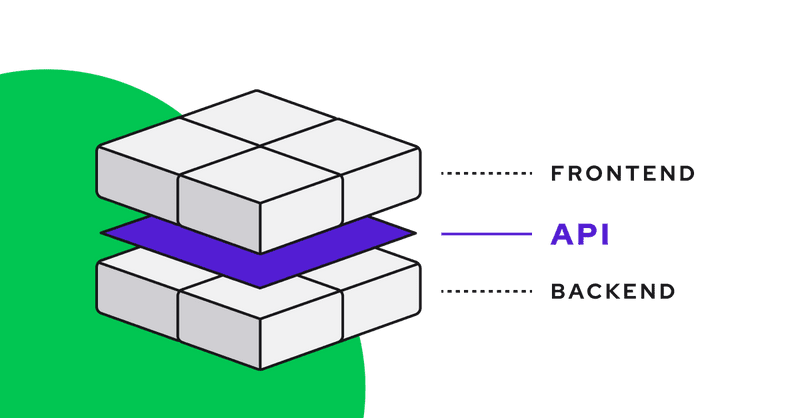
Content living within headless architecture is delivered to its end user by API, making seamless displays across different platforms possible. This makes data within the backend endlessly reusable, even in today’s world of highly-competitive omnichannel customer experiences.
Key API Technologies: REST vs. GraphQL
For APIs to work, they need a shared set of rules for making requests and getting responses. Two dominant technologies for this are REST and GraphQL. REST (Representational State Transfer) has been the standard for years. As ElifTech notes, "REST is simpler, uses standard web requests (like GET, POST), and is good for basic data." It’s a reliable and straightforward approach that works well for many applications. Think of it like ordering a combo meal at a restaurant—you get a predefined set of items in a predictable structure, which is often exactly what you need.
GraphQL offers a more flexible alternative. Instead of the server deciding what data to send, "GraphQL lets clients ask for exactly the data they need, avoiding getting too much information," which is ideal for complex applications. To continue the restaurant analogy, GraphQL is like ordering à la carte. You request only the specific dishes you want, which can make the whole process more efficient, especially when dealing with mobile apps or devices with limited bandwidth. The choice between them depends entirely on the specific needs of the project and the complexity of the data involved.
The Role of JSON in Data Exchange
Once an API call is made, the data needs to be sent back in a format that both the frontend and backend can understand. This is where JSON (JavaScript Object Notation) comes in. According to Contentful, "JSON is commonly used for data exchange in APIs, providing a lightweight format that is easy for both humans and machines to read and write." Its clean, key-value pair structure makes it incredibly simple to parse, which is why it has become the de facto standard for most modern APIs, regardless of whether they use REST or GraphQL.
The beauty of JSON is its simplicity and efficiency. Because it’s lightweight, it reduces the amount of data that needs to be transferred, leading to faster load times and a better user experience. For developers and content teams, its human-readable format makes it easier to troubleshoot issues and understand the data structure at a glance. This standardized format is a critical piece of the puzzle, ensuring that the structured content from the backend can be reliably interpreted and displayed by any frontend application that requests it.
Understanding the API-First Development Strategy
Traditionally, many teams built an application first and then created an API afterward to expose its data. However, a more modern and effective method is the API-first approach. ElifTech defines this as "an approach where you design the API first, before building the rest of the software." By treating the API as a central component from the very beginning, teams can work in parallel. The frontend team can build the user interface using a mock API, while the backend team works on the underlying logic, significantly speeding up the development cycle.
This strategy also leads to better-designed, more consistent, and reusable APIs. For content operations, an API-first approach ensures that the way you manage structured content is considered a foundational part of the product, not an afterthought. It forces everyone to agree on the data structure and endpoints early on, which helps prevent integration headaches down the line. This thoughtful planning makes it easier to deliver content reliably to any channel and ensures the API remains stable and scalable as new frontends are added over time.
Common Use Cases for Headless APIs
The real power of a headless architecture is its incredible flexibility. By separating your content repository from the presentation layer, you can deliver that content to virtually any digital touchpoint. This approach future-proofs your content strategy; as new devices and platforms emerge, you don’t have to rebuild your entire content stack. Instead, you simply create a new frontend experience and connect it to your existing API. This is where having well-structured, granular content becomes a massive advantage. Content designed for reuse can be seamlessly delivered to a website, a mobile app, a chatbot, or even an in-store kiosk without any changes to the source.
This model allows organizations to create truly unified omnichannel experiences. A customer can get the same accurate product information whether they are browsing your website, asking a voice assistant a question, or using an augmented reality application. The API acts as a universal content pipeline, making the process of publishing structured content to diverse endpoints efficient and consistent. Let’s look at some of the most common ways businesses are putting headless APIs to work to create innovative and engaging user experiences across a wide array of channels.
Headless Commerce
Headless commerce is one of the most popular applications of this architecture. It decouples the ecommerce platform—which manages products, carts, and checkouts—from the customer-facing storefront. As Strapi explains, "Headless commerce allows retailers to create custom shopping experiences across websites, mobile apps, and in-store kiosks from one backend, offering personalized shopping." This means a brand can use a single backend system to power a highly customized website, a sleek mobile app, and even interactive displays in a physical store, all while maintaining a single source of truth for product information and inventory.
Single-Page Applications (SPAs)
If you’ve ever used a web application like Gmail or Google Docs, you’ve experienced a Single-Page Application. SPAs provide a fluid, app-like experience within a web browser by loading a single HTML page and dynamically updating content as the user interacts with it. According to ElifTech, "Single-Page Applications (SPAs) benefit from headless APIs by allowing dynamic content loading without refreshing the page, providing a smoother user experience." The SPA frontend makes API calls to the backend to fetch or send data without a full page reload, resulting in a much faster and more responsive feel for the user.
Internet of Things (IoT) and Smart Devices
The Internet of Things includes a vast network of connected devices, from smart home appliances to industrial sensors. These devices need a way to send and receive data from a central server. "Headless APIs help smart devices communicate and exchange data with backend systems, controlling devices and sharing data," as noted by ElifTech. For example, your smart thermostat uses an API to pull weather forecasts from a server to adjust your home’s temperature, and you use a mobile app that communicates with that same API to change the settings remotely. This makes APIs the essential communication backbone for the entire IoT ecosystem.
Content for Voice Assistants and AR/VR
Emerging platforms like voice assistants and augmented or virtual reality applications represent a new frontier for content delivery. A headless architecture is perfectly suited for these channels because they are purely concerned with data, not visual presentation. As Contentful points out, "Headless architecture allows for content to be delivered to various platforms, including voice assistants and AR/VR applications, ensuring a consistent experience across devices." A field technician wearing AR glasses could see step-by-step repair instructions overlaid on a piece of machinery, with that content pulled from the same repository that feeds the online user manual. This is possible because of highly structured content standards like DITA, which break information down into reusable components.
Integrating Third-Party Services
APIs are not just for connecting your own frontend and backend; they are also the standard way to integrate external tools and services into your application. "Headless APIs enable easy integration with third-party services, allowing businesses to leverage existing tools and platforms to enhance their applications," states Contentstack. For instance, you might use APIs to integrate a payment processor like Stripe, embed maps from Google Maps, or connect to a customer relationship management (CRM) system. This allows you to add powerful functionality without having to build it from scratch, saving significant development time and resources. It also makes processes like translation management much smoother by connecting your content repository directly to localization platforms.
8 Reasons to Adopt a Headless Approach
Headless architecture offers a dynamic approach to brand management in a market saturated with a wide variety of media channels and platforms. Here’s the 8 top benefits a headless architecture can offer your business.
1. Improve Your Team's Efficiency
A headless architecture allows users to create content in one place and publish it anywhere. Instead of recreating the same content over and over again, a single piece of content can be reused on multiple channels. This is called content reuse and is one of the main benefits of using a headless architecture.
With a headless approach, companies can also easily switch between channels without losing or recreating their content. This makes the creation process extremely efficient and allows creative teams to focus on making new content.
2. Integrate with Any Front-End
Taking a headless approach to architecture will allow your business to use any frontend platform to deliver content. Instead of sticking to traditional website and app layouts, your team of web developers will have the freedom to create and share innovative materials.
An architecture compatible with all digital channels is especially important as we continue to see advancements in technology. Headless architecture provides any media platform with a consistent experience, whether it’s on a smartwatch or virtual reality headset.
3. Gain More Creative Flexibility
Traditional architectures tend to restrict most web developers from taking easy action. Headless architectures free developers of backend limitations and allow them to integrate codebases and programming languages as needed.
In a headless environment, expensive teams of highly skilled developers are no longer necessary. While knowledge of backend frameworks is still necessary, headless architectures require much less technical expertise.
4. Future-Proof Your Content
For companies that value tech innovation, headless architectures are the perfect foundation for future-proof success. Most organizations adopt a headless approach early to enjoy long-term efficiency and always be one step ahead of the competition.
5. Let Your Developers Work Faster
When frontend and backend systems aren’t connected, creative teams can easily manage and evolve content without the constant need to involve developers. When it comes to making requests to change content, having a headless architecture in place can save your team hours of valuable time.
In a headless environment, content creators also have more control over their ability to instill quality and personalization into their work. With high-quality, personalized content, customers are more likely to engage and enjoy materials offered by your business.
6. Deliver a Better, Faster User Experience
Slow web pages are guaranteed to kill leads and important conversations. This makes digitally optimized performance key to gaining new prospects and creating a fulfilling customer experience.

In a recent survey, more than 91% of respondents said that headless architecture leads to enhanced digital performance due to an elevated content experience.
Since headless architecture uses API to communicate between the separated frontend and backend, your website performance is always secure. With headless architecture, your site won’t be compromised if the backend runs into any technical issues.
7. Reduce Your Security Risks
With headless architecture, you won’t have to worry about additional security practices required by traditional systems, like WordPress. Since the content provided by API is usually “read-only”, an additional layer of much-needed security will already be featured in your company’s architecture.
Not only that, but your team of web developers will also have the ability to hide the API behind several layers of code, ultimately shielding it from the possibility of an attack. Considering that more than 72% of WordPress sites are vulnerable to hackers, increased security is always a plus.
8. Keep Your Brand Consistent Across Channels
Consistency is crucial to every brand’s satisfying user experience – and unfortunately, using several platforms to manage content is guaranteed to create inconsistencies.
Using a traditional architecture means having differences between frontends and backends, as each part is coded with its own programming language. Headless architectures offer the ability to stabilize data in the backend and leave flexibility in the front end to meet a business’s individual needs.
Since headless architectures unify data, structure, and logic, companies are able to create brand consistency across all digital platforms.
Implementation and Best Practices
Adopting a headless architecture is more than just a technical switch; it requires a thoughtful strategy to get the most out of it. By focusing on a few key areas, you can build a system that’s not only flexible but also secure, fast, and reliable. These best practices cover everything from protecting your data to ensuring your users have a smooth experience, setting your team up for long-term success.
Ensuring API Security
With the API acting as the bridge between your content and your frontends, its security is non-negotiable. A poorly secured API can expose sensitive data and open the door to system abuse. The goal is to create multiple layers of defense that control who can access your API and what they can do. This involves verifying the identity of every user and application and putting up guardrails to prevent malicious or accidental overload.
Authentication and Authorization with OAuth 2.0 and JWT
Authentication confirms who a user is, while authorization determines what they’re allowed to do. Strong methods like OAuth 2.0 are essential for managing user access without sharing passwords directly. JSON Web Tokens (JWT) can then be used to securely transmit information between parties. Together, they create a robust system for verifying identities and enforcing permissions for every API request.
Rate Limiting and API Gateways
An API gateway acts as a single entry point for all clients, which makes it the perfect place to enforce security policies. One of the most critical policies is rate limiting, which prevents any single user or application from overwhelming your system with too many requests in a short period. This is a key defense against denial-of-service (DDoS) attacks and ensures fair usage for everyone.
Optimizing for Performance
A headless architecture gives you incredible flexibility, but that flexibility can come with performance overhead if you're not careful. The key is to make data delivery as fast and efficient as possible. This means reducing the distance data has to travel and minimizing the size of the data packets themselves. A snappy, responsive user experience depends on a high-performing backend and API.
Caching with a CDN and Load Balancing
Caching is your best friend for performance. A Content Delivery Network (CDN) stores copies of your content in servers around the world, so users get data from a location physically closer to them, which speeds up load times. Load balancing helps by distributing incoming API requests across multiple servers, preventing any single server from becoming a bottleneck during traffic spikes.
Pagination and Asynchronous Processing
When an API needs to return a large amount of data, don't send it all at once. Use pagination to break the data into smaller, manageable "pages." This makes the initial response much faster. For long-running tasks, use asynchronous processing. Instead of making the user wait, the API can acknowledge the request immediately and notify the client when the task is complete.
Testing and Deployment Strategies
A solid testing and deployment strategy ensures that you can release new features and fixes quickly without breaking what’s already working. The goal is to catch bugs early and make the release process as smooth and predictable as possible. Automating these processes reduces human error and gives your development team the confidence to innovate and iterate rapidly.
Automated Testing: Unit, Integration, and Load Tests
Automated tests are your safety net. Unit tests check individual pieces of code, integration tests ensure different parts of your system work together correctly, and load tests simulate heavy traffic to see how your API holds up under pressure. Running these tests automatically before any new code is deployed helps you catch bugs before they ever reach your users.
CI/CD Pipelines and Canary Releases
Continuous Integration/Continuous Deployment (CI/CD) pipelines automate the process of building, testing, and deploying your code. This makes releases frequent and reliable. For extra safety, consider canary releases. Instead of releasing a new feature to all users at once, you can roll it out to a small subset first. This allows you to monitor its performance and impact in a real-world environment before a full launch.
The Importance of Monitoring
You can't improve what you don't measure. Monitoring your API gives you the visibility you need to understand how it's being used, identify performance bottlenecks, and catch errors as they happen. It turns guesswork into data-driven decision-making, allowing you to proactively maintain the health and efficiency of your headless architecture.
Tracking API Usage, Response Times, and Error Rates
Keep a close eye on key metrics. Track the total number of requests to understand usage patterns, monitor response times to ensure a speedy user experience, and log error rates to quickly identify and fix problems. This data is invaluable for troubleshooting issues, planning for future capacity, and continuously improving your API's performance and reliability.
Potential Challenges of a Headless Architecture
While a headless approach offers significant advantages in flexibility and scalability, it's not without its own set of challenges. Moving from a traditional, monolithic system requires a shift in both technology and mindset. Teams need to be prepared for a different way of working, from the initial setup to the day-to-day management of content. Understanding these potential hurdles upfront can help you plan for them and choose the right tools to mitigate them.
Increased Initial Complexity and Cost
Decoupling the frontend from the backend introduces new layers of complexity. Your team will need expertise in API development, frontend frameworks, and the infrastructure required to connect them. This can lead to a higher initial investment in both time and resources compared to an all-in-one traditional system. The setup requires careful planning to ensure all the separate components can communicate effectively and securely, which can be a steep learning curve for teams new to this architecture.
Content Preview and Governance Hurdles
One of the most common challenges in a headless environment is for content creators. Without a tightly coupled frontend, it can be difficult to preview how content will look on different devices before it's published. This can disrupt workflows and make it harder to ensure a consistent brand experience. Furthermore, managing content across so many channels requires strong content governance. Without a centralized system to control content structure, metadata, and workflows, it's easy for inconsistencies to creep in, undermining the very consistency a headless architecture aims to provide.
Is a Headless Architecture Right for You?
Headless architecture is the key to building a platform that provides stability, flexibility, and organizational efficiency. Updating your business’s architecture with a headless approach will give your company the competitive edge it needs to ensure an impressive user experience.
Heretto Deploy API offers a headless CCMS option to publish content anywhere. From chatbots and custom apps to car dashboards and medical devices, Heretto Deploy API provides endless publishing possibilities. Start building your headless architecture today by booking a demo!
A Framework for Making the Decision
Deciding to switch to a headless architecture is a big move. To figure out if it’s the right one for your team, it helps to look at a few key areas of your current content operations. This framework breaks down the decision into three critical questions about your system's performance, your delivery needs, and your team's resources.
Evaluating Your Current System for Performance Bottlenecks
Slow-loading documentation pages can stop a positive user experience in its tracks. When users need an answer, every second of load time creates friction and frustration. If your current system struggles to deliver content quickly, it’s often because the frontend presentation layer and the backend content repository are tightly coupled, forcing the entire system to work just to render a single page. A headless architecture decouples these layers, allowing you to build a lightweight, optimized frontend that pulls content via an API. This separation is key to creating a fulfilling customer experience where users get the information they need instantly.
Assessing Your Need for Multi-Channel Delivery
Think about all the places your customers need technical information. It’s not just on a documentation portal anymore; it’s inside your application, in chatbots, on mobile devices, and through knowledge bases. A headless approach makes your backend content easily shareable to as many frontends as you need. Instead of copying, pasting, and reformatting content for every channel, you can publish from a single source of truth. This ensures consistency and saves your team from the administrative headache of managing content in multiple places, which is a common problem with traditional, monolithic systems.
Considering a Build vs. Buy Approach
Once you see the need for a headless approach, the next question is how to implement it. Building a custom solution offers complete control but requires significant, ongoing developer resources. For most content teams, a "buy" approach using a headless Component Content Management System (CCMS) is more practical. This gives you the API-first infrastructure you need without the development overhead. When your systems aren’t connected, your content creators can easily manage and update documentation without constant developer support. Adopting a proven solution is the perfect foundation for future-proof success, letting you focus on content, not code.
Putting Headless into Practice with Heretto
Heretto Deploy API offers a headless CCMS option to publish content anywhere.
Frequently Asked Questions
What's the main difference between a headless and a traditional system? Think of a traditional system as an all-in-one package where your content and its design are permanently bundled together. A headless system separates these two things. Your content lives in one central hub (the backend), and an API delivers it to any number of different designs or platforms (the frontends). This separation is what gives you so much more flexibility.
Do I need to be a developer to manage content in a headless system? Not at all. While developers are needed to set up the initial connections between your content hub and the various places you want to publish, the goal of a headless system is to empower content teams. Once it's configured, you can create, manage, and update all your content from one place without writing any code, and the system handles delivering it to all the connected channels.
Is a headless architecture only useful for websites and mobile apps? Websites and apps are common uses, but the real power of a headless approach is its ability to deliver content to virtually any digital touchpoint. This includes things like in-app help widgets, chatbots, knowledge bases, and even emerging technologies like voice assistants or augmented reality displays. Your content repository becomes a single source of truth for every channel.
The blog mentions "increased initial complexity." Does that mean switching is too difficult? It's true that setting up a headless architecture requires more upfront planning than using a single, pre-packaged system. You have to consider how different components will work together. However, this initial investment in strategy results in a far more scalable and adaptable system. The long-term efficiency you gain by managing content in one place far outweighs the initial setup effort.
How does structured content help with a headless approach? Structured content is the ideal foundation for a headless architecture. When your content is broken down into small, reusable, and semantically tagged components, it becomes much easier for an API to pull the exact piece of information needed for a specific context. Instead of sending a whole page, the API can deliver just a single procedure, a warning, or a product name, ensuring the content is perfectly tailored for any channel.


